


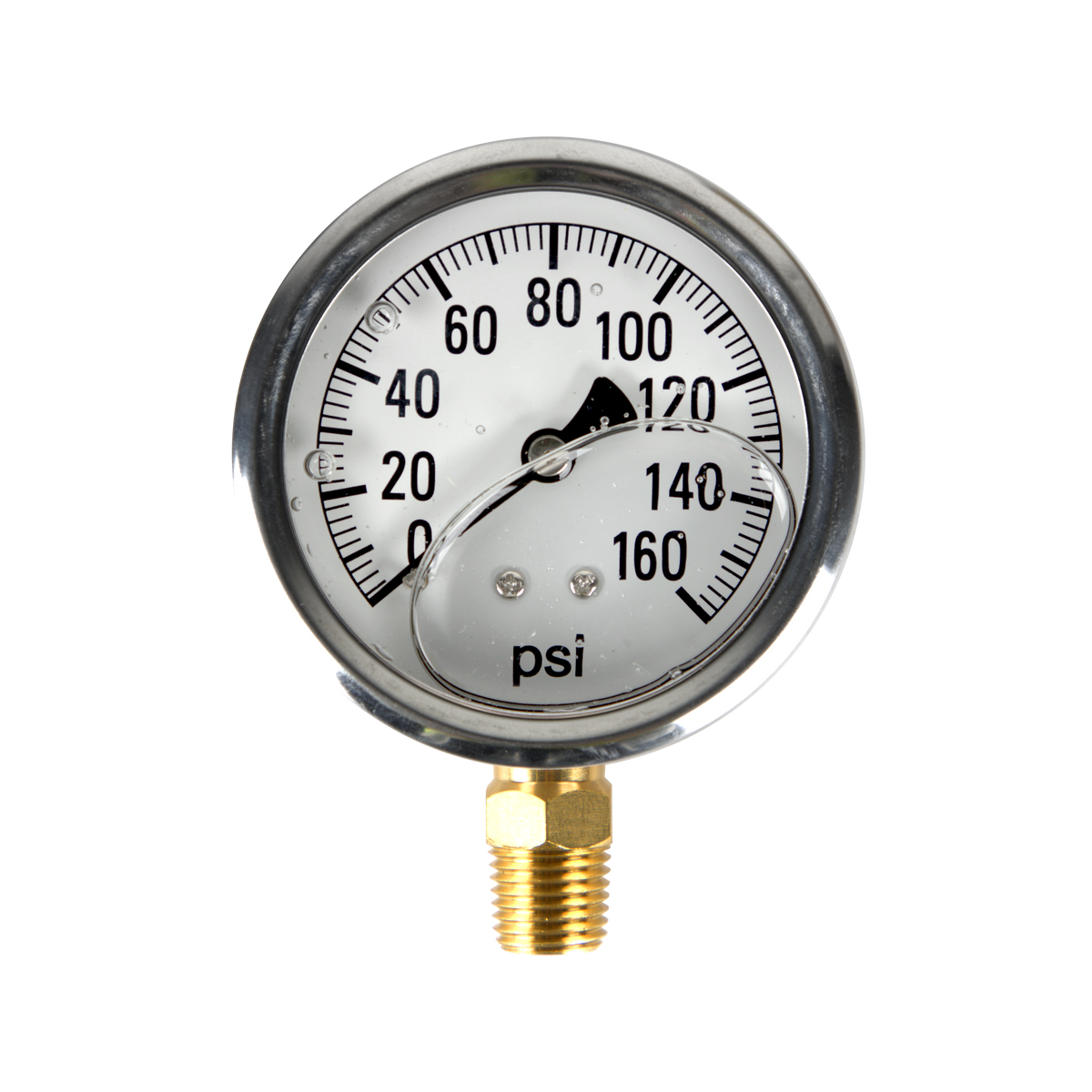
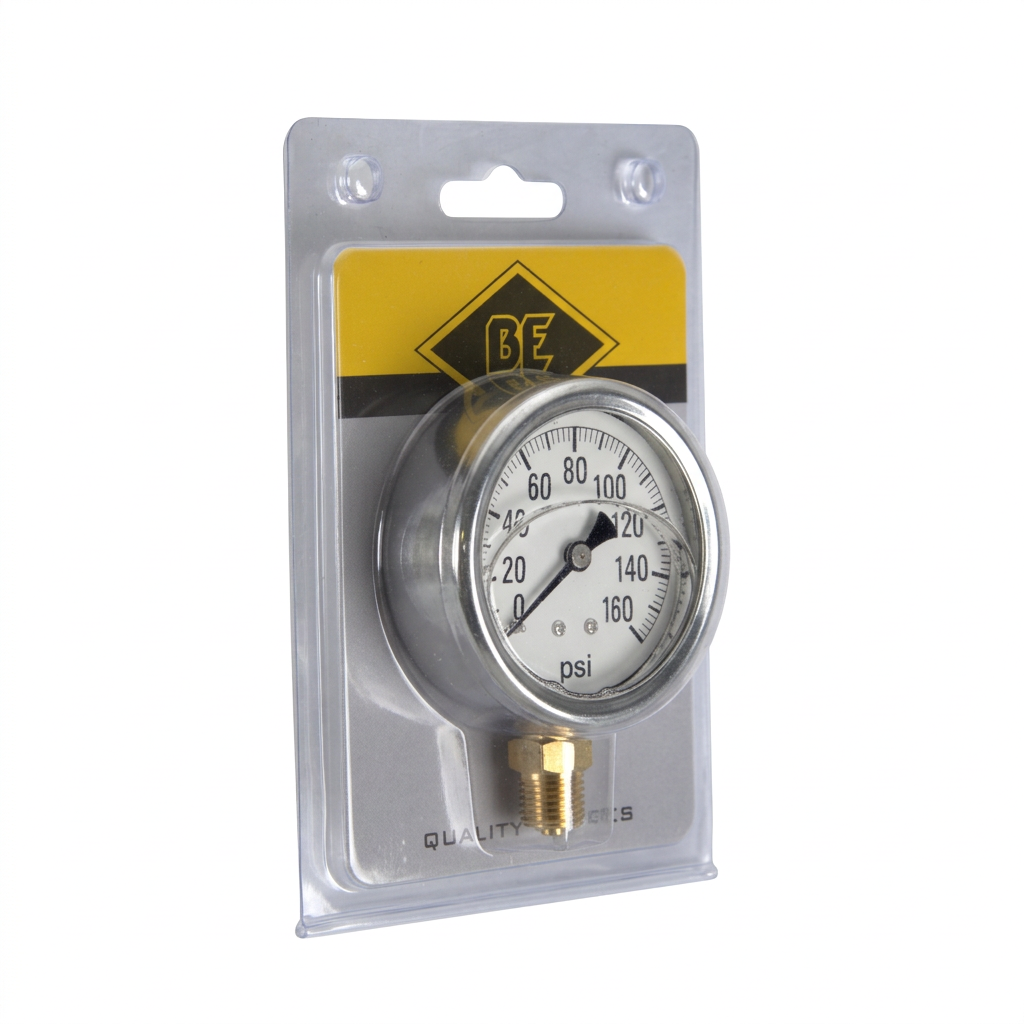
Brass Glycerin Gauge 2-1/2" Dial 1/4" MNPT 160 PSI
Brass Glycerin Gauge 2-1/2" Dial 1/4" MNPT 160 PSI
Couldn't load pickup availability
Specifications
PSI
0-160
SERIES
41
MAX TEMPERATURE
32-150°F
Inlet Size
1/4" MNPT
PRODUCT
DESCRIPTION
Reliable Pressure Readings For Demanding Conditions - BE Power Equipment Systems
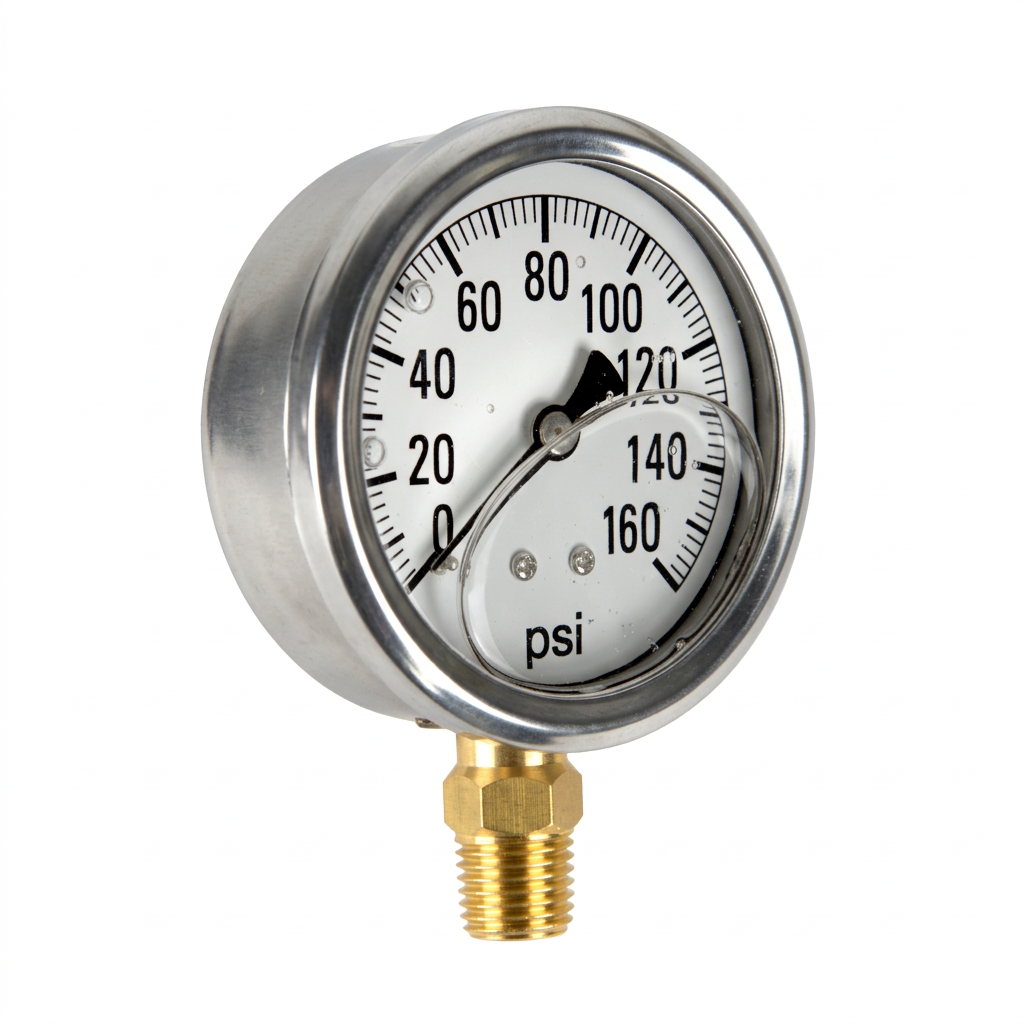
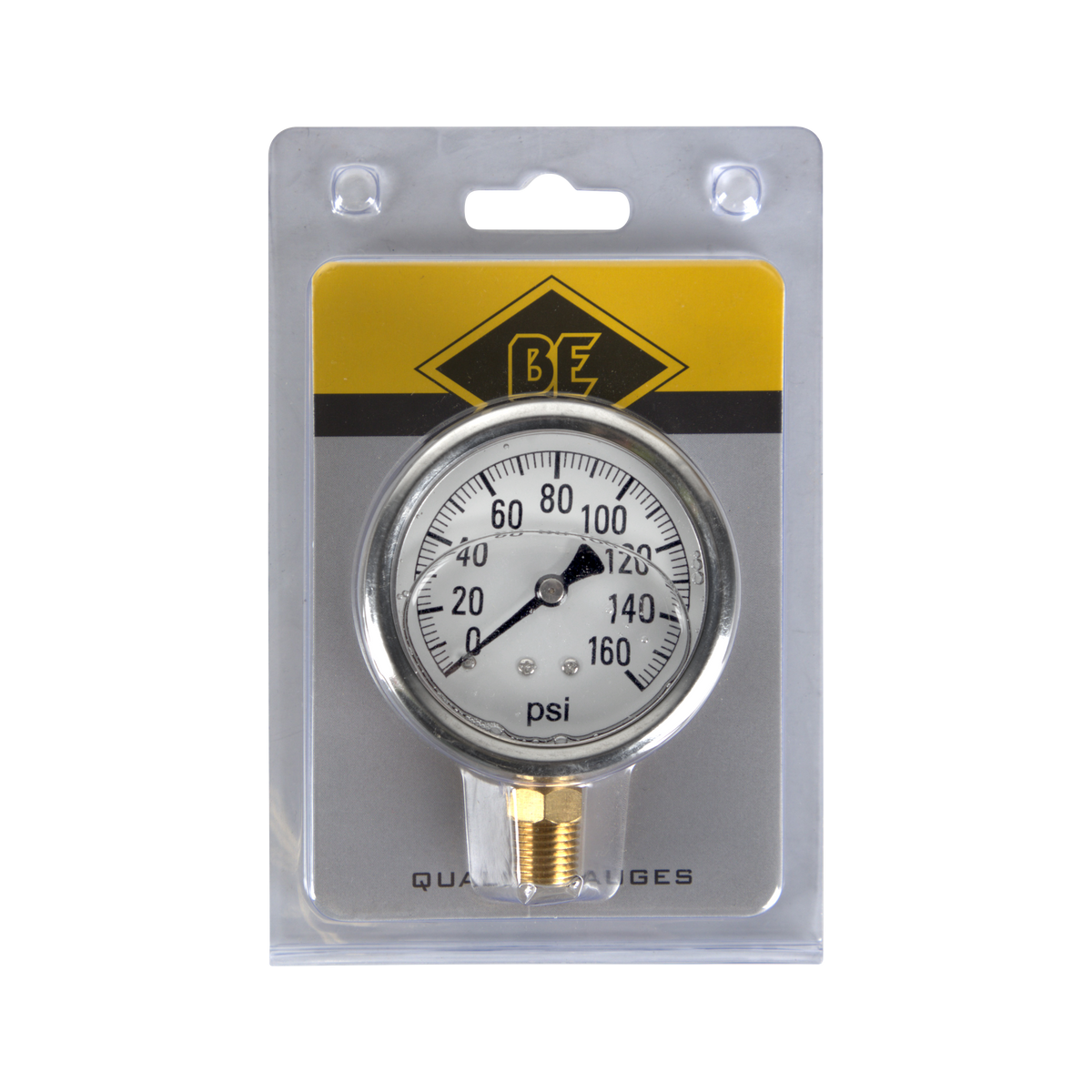
This brass pressure gauge with a glycerin fill delivers a solid 2 1/2" dial, a 1/4" NPT lower-mount connection, and a 0-160 PSI range built for BE Power Equipment systems. Get accurate, vibration-resistant pressure monitoring at pump outlets and other connected BE Power Equipment systems for water & air applications. From pressure washers to compressors to pumps & hydraulics, this gauge lets you track gas or liquid pressure in connected vessels or systems at a glance & trust the reading every single time.
What Makes You Want This Gauge
Whether you're putting a new BE Power Equipment unit in or keeping an existing one running, this gauge makes pressure monitoring simple & reliable.
Dead-accurate pressure monitoring - The glycerin-filled gauge protects against vibration and pulsation while smoothing needle movement from pumps, motors, & compressors, giving you spot-on readings and a heads-up on issues like worn nozzles or slow leaks. Accuracy is ±1.5 % or 2.5% of full scale.
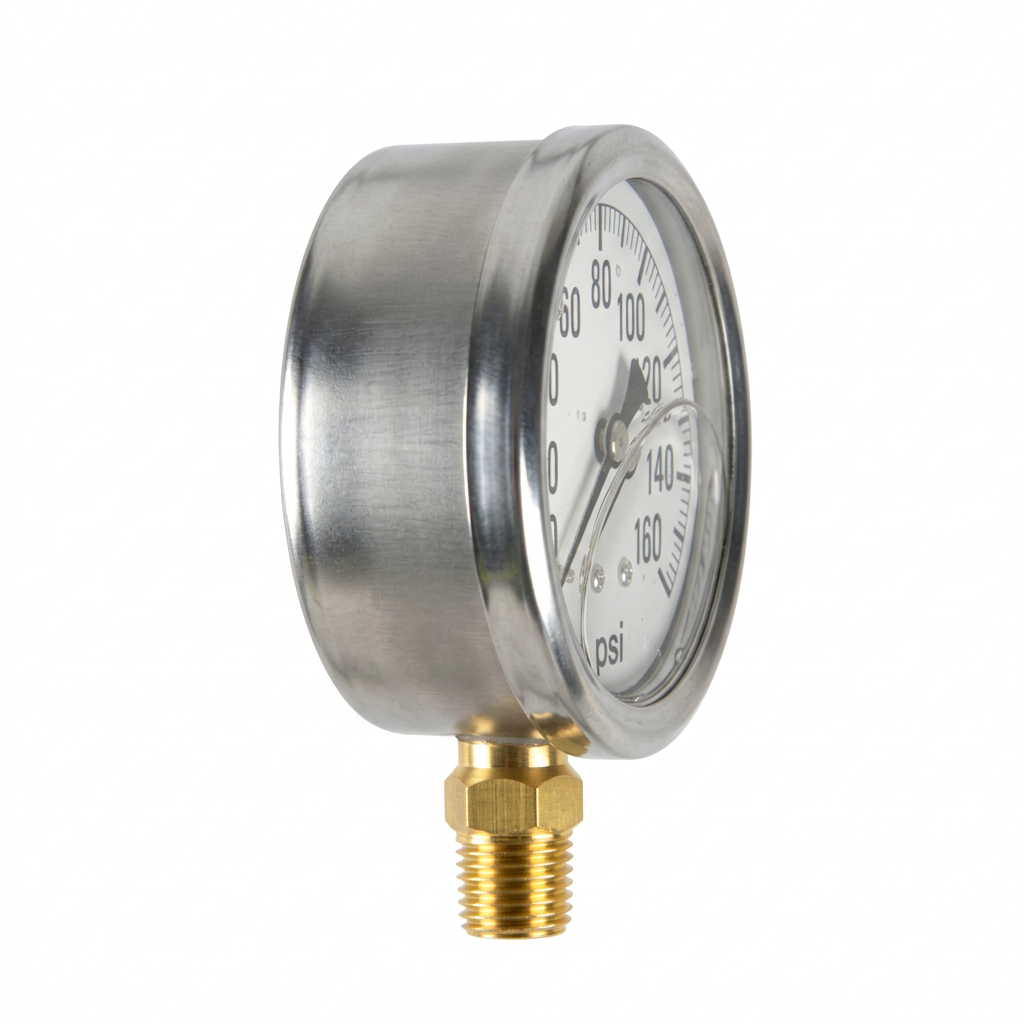
Built to Withstand the Jobsite - Heavy-duty brass parts resist corrosion in water & air applications, and the sealed case protects internal parts from shock, dust & moisture. Perfect for outdoors, in trailers or on a shop workbench.
Quick Readability - The 2 1/2" dial provides clear, easy-to-read pressure readings from several feet away. The white face with clear black PSI markings from 0 to 160 PSI makes it easy.
Easy install - 1/4" NPT threads screw right into standard female ports on pumps, manifolds & lines, and quick-connect fittings allow easy installation and removal of gauges. A quick customer review scan also helps customers confirm fit before ordering.
Long-term reliability - The glycerin inside lubricates internal components, reduces mechanical wear, and keeps moisture out. Its stable calibration, longer service life, and strong review feedback make it a better bet than dry gauges.
What Gives It The Edge
Dry gauges are notorious for pointer flutter, premature wear & moisture buildup. The BE Power Equipment brass glycerin gauge is built to overcome all that and suits industrial pressure applications where durability and reliability matter.
Glycerin-filled for a smooth ride - It absorbs vibration and pulsation, giving you smooth, steady needle movement. Pneumatic systems benefit from stable readings because the needle stays from moving excessively. Perfect for pneumatic & water systems driven by pumps.
Optimized 0-160 PSI Range - This range is made for common BE Power Equipment systems. The 0-160 PSI rating suits low-pressure systems to help prevent over-pressurization, and the over-pressure limit is 25% for pressures up to 1,400 psi.
Brass is the best - Resistant to clean water and compressed air, with heavy-duty construction that boosts durability and reliability in harsh conditions. For more corrosive or high-temp stuff, stainless steel is recommended.
2 1/2" dial is just right - Hits the balance between readability & compactness. Works great on pump heads & panels and lets you read it from 3-4 feet out.
How It Works
-
Connect the pressure source - Screw the 1/4" NPT thread into any matching female port on your BE Power Equipment system. Add some thread sealant tape & orient it so you can see it from a distance.
-
Sensing & dampening - A brass Bourdon tube inside flexes with pressure changes. The glycerin inside absorbs all the vibrations from pumps & compressors so the needle doesn't jump around.
-
Steady display - The tube's movement drives the needle across the 0-160 PSI scale. The glycerin does its magic, smoothing out micro-movements for a steady, easy-to-read display.
Product Details and Dial Size
-
Material / Construction - Brass socket; brass and copper alloy wetted parts resistant to non-corrosive fluids; glycerin-filled liquid case.
-
Dial size - 2 1/2" white face with black PSI markings.
-
Pressure Range - 0-160 PSI.
-
Connection type - 1/4" NPT male lower mount.
-
Fill Fluid - Glycerin helps prevent internal condensation and fogging in varying temperatures.
-
Accuracy - ±1.5 % or 2.5% of full scale.
-
Recommended Media - Non-corrosive liquids & gases.
-
Operating Temperature - -4 to 150°F.
-
Applications - Industrial and commercial fluid or pneumatic systems, including pumps, compressors, and hydraulic presses.
-
Included - One BE Power Equipment brass glycerin gauge with installation instructions.
-
Warranty - Standard BE Power Equipment product support.
Who This Is For
This gauge is perfect for:
-
BE Power Equipment pressure washer owners.
-
Contractors & techs looking for a reliable 0-160 PSI gauge for water & air systems.
-
Facility managers overseeing compressors, pumps & hydraulics.
-
DIY folks & hobbyists using a gauge like this in small-scale setups.
Frequently Asked Questions
Is it easy to install? Yes, it is. The 1/4" MNPT male connection clips onto a standard female port - you just apply some thread sealant tape and tighten it securely. Quick-connect fittings do all the hard work for you, making tool-free installation and removal a breeze.
Can I use it with water and air? The good news is you can - it's totally fine to use it with non-corrosive water, compressed air, or other suitable media with similar properties.
Why glycerin-filled, do you ask? One reason is that gauges can be filled with glycerin to reduce vibration effects, and it also lubricates the moving parts and helps prevent condensation, which extends gauge life and keeps readings accurate.
Is 0–160 PSI the right range? The gauge is designed for systems that mostly run between 40 and 120 PSI, and it'll give you accurate readings even when the pressure spikes a bit, helping you find the right fit for your system.
How do you read the dial? Just look straight at it - avoid looking at it from the side because that can cause you to read the needle out of sync with the markers. Just glance straight at the dial and read the needle position against the clear 0–160 PSI markings.
How much maintenance does it need? Just keep an eye out for any damage or leaks - if the dial starts to fog or your readings get wonky, you'll need to replace it. But no routine calibrations are needed, and pressure gauges operate in temperatures from -4 to 150 degrees F.
Ready to give your Pressure Monitoring a Boost?
The BE Power Equipment® brass glycerin gauge is built tough, easy to read, and can shrug off vibrations that would give a dry gauge the boot. Protect your gear by getting reliable pressure readings that can help you optimize performance and catch any issues early before they become a big problem.
Add this gauge to your cart - and your BE Power Equipment system - and get secure checkout and super-fast processing so you can get hold of the quality you need right away.
Frequently Asked Questions about Pressure Washers
How to store a pressure washer?
To ensure the durability of your heavy duty pressure washer:
- Empty the gas tank to prevent fuel from degrading or clogging the engine.
- Empty the pump and hoses of any remaining water.
- Perform necessary maintenance before storage.
- Store in a dry area.
- Cover.
What is a pressure washer?
A power washer is a cleaning machine that uses a gasoline engine to power a high pressure water pump and nozzle. It’s used to clean driveways, decks, vehicles, outdoor furniture and more by spraying water at high PSI to remove dirt, grime, mold and other debris.Many models also come with a detergent tank for added cleaning power.
How does a power washer work?
A power washer works by drawing water from a connected hose and pumping it through a high pressure nozzle. The gas engine powers the pump which pressurizes the water and then expels it through the nozzle at high speed to clean the surface. The water pressure is measured in PSI (pounds per square inch) and the flow rate is measured in GPM (gallons per minute).Many models also feature adjustable water pressure settings to cater to different cleaning needs. BE makes pressure washing easy with models available for light jobs and heavy duty commercial cleaning projects.
Gas vs Electric power washers?
The main difference is that a gas pressure washer, known for its cleaning power, is powered by a gasoline engine, making it more powerful and portable, while an electric pressure washer is powered by electricity and is generally quieter and lighter.
Gas pressure washers are for heavy duty and large areas due to their durability, whereas electric pressure washers are for smaller jobs.
Your BE electric pressure washer is perfect for smaller jobs and built for portability, and we offer a wide range of electric models. Included with our electric models is a long extension cord for use anywhere around your house.
What to consider?
When choosing a gas pressure washer consider:
- Pressure (PSI): More PSI means more cleaning power but also more potential for damaging delicate surfaces.
- Flow Rate (GPM): More GPM means faster cleaning as more water is dispensed.
- Engine Power: Bigger engines mean more durability and power.
- Portability: Weight, handle design and wheel size for easier to move.
- Nozzles: Multiple spray nozzles to adjust the spray pattern for different tasks.
- Adjustable Nozzle: Allows for fine-tuning the spray intensity and pattern for various cleaning needs.
How much pressure do I need for?
The required pressure (PSI) and cleaning power depend on the surface you’re cleaning:
- Light duty (car washing, outdoor furniture): 1,300-1,800 PSI.
- Medium duty (patios, fences, decks): 2,000-3,000 PSI.
- Heavy duty (driveways, brick walls, large equipment): 3,000+ PSI.
Many pressure washers come with adjustable pressure settings to handle different cleaning tasks effectively.
Can a pressure washing damage surfaces?
Yes, a power washer can damage surfaces if used incorrectly. High pressure water can strip paint, dent soft surfaces or even cause structural damage if the pressure is too high or the nozzle is held too close to the surface. Always use the right PSI for the material you’re cleaning and keep a safe distance from delicate surfaces.
To prevent damage, consider using a model with adjustable pressure settings.
How to maintain your pressure washer?
To ensure the durability and smooth operation of a pressure washer:
- Change the oil as per manufacturer’s instructions.
- Clean or replace the air filter to ensure good airflow.
- Inspect and clean the nozzle regularly to prevent clogs.
- Drain the gas tank if you’re storing the washer for a long time.
- Check the hoses for leaks or damage and replace them if needed.
- Follow regular maintenance requirements to keep the washer in optimal condition.
Can I use a pressure washer in cold weather and low water temperature?
You can use a pressure washer in cold weather but it’s more difficult. The water flow rate in the hoses and pump can freeze and damage the equipment. If you plan to use your pressure washer in cold temperatures make sure to winterize it and store it in a warm area when not in use. You can also use anti-freeze solutions for pressure washers.
Some models are designed to use hot water, which can be particularly effective for cleaning in cold weather.
Do I need any accessories?
Common accessories for power washers:
- Different nozzles (0°, 15°, 25°, 40°, and soap nozzle) to adjust spray patterns.
- Extension wands for hard to reach areas.
- Surface cleaners for large flat areas like driveways and decks.
- Hose reels to store hoses neatly and prevent tangling.
- Foam cannon or detergent bottles for soap or cleaning solutions.
- Detergents for cleaning a wide variety of surfaces.